
Quick Overview
Looking for interior design near me is about more than finding someone who can make your home look beautiful. The right designer should understand your lifestyle, space, storage needs, budget and personal taste. From modern home interiors and modular kitchens to lighting, wardrobes and complete residential design, this guide explains how to choose the right professional, understand costs, avoid common mistakes and turn your house into a comfortable, functional home.
Introduction: Your Home Should Feel Like You
Interior design near me is probably one of the first searches you make when your new flat is ready, your renovation is overdue, or your Pinterest board has officially become longer than your grocery list.
And honestly, finding a designer is easy.
Finding the right designer is the real challenge.
You want a home that looks impressive when guests arrive—but you also want storage that actually works, a kitchen where two people can move without performing a complicated dance, bedrooms that feel relaxing and lighting that doesn’t make everyone look like they’re attending a passport-photo appointment.
That is where professional interior design becomes valuable.
At Divya Interior Designer, the focus should not simply be on making a room attractive. Good residential interior design combines aesthetics, functionality, material selection, space planning, lighting, storage and your everyday lifestyle.
If you’re searching for a designer around Noida, Greater Noida, Greater Noida West, Noida Extension, Gaur City, Ghaziabad or Delhi NCR, your shortlist should begin with experience, communication and transparency—not just Instagram photographs.
Before making a decision, you can also explore Interior Designer in Noida Extension for Beautiful, Smart Homes for more location-focused ideas.
Why homeowners usually search for interior design near me
- They have purchased a new 2BHK, 3BHK or larger home.
- They want to renovate an existing property.
- They need a better modular kitchen and storage.
- They want a modern living room without wasting space.
- They need practical wardrobes and smart storage.
- They want better lighting and false-ceiling planning.
- They want professional guidance before spending their interior budget.
- They need someone to coordinate design and execution.
And there is one more reason: decision fatigue.
There are thousands of colours, laminates, handles, tiles, lights, fabrics, wallpapers and furniture styles available today. A good designer reduces that noise and helps you make decisions that work together.
What Does Interior Design Near Me Actually Include?
Interior design is often misunderstood as choosing curtains, sofas and wall colours. In reality, it involves much more.
Interior design combines the planning of space with aesthetics, functionality, materials, lighting and the way people use a building. The distinction between interior design and simple decoration is important because a designer may address spatial planning and technical considerations, while decoration is more focused on furnishing and visual styling.
1. Space planning
Before choosing a beautiful sofa, you need to know whether the sofa actually fits.
Space planning considers:
- Room dimensions
- Furniture placement
- Movement pathways
- Door and window positions
- Storage requirements
- Electrical points
- Lighting positions
- Family routines
For example, a compact living room may benefit more from a wall-mounted TV unit and slim-profile furniture than from filling the room with oversized pieces.
2. Functional storage
Indian homes often have one universal interior requirement:
“Where do we put all this stuff?”
From clothes and luggage to crockery, appliances, books, documents and children’s belongings, storage needs to be planned from day one.
A modern interior designer near me should therefore discuss storage before decorative elements.
3. Material and finish selection
The same design can look completely different depending on the materials used.
Common choices include:
- Laminates
- Acrylic finishes
- Veneers
- Glass
- MDF
- Plywood
- Natural stone
- Quartz
- Wallpaper
- Fabric
- Metal
- Wood finishes
The right material depends on budget, maintenance, durability, location and the intended use of the space.
4. Lighting design
Lighting can completely change the personality of a room.
A practical lighting plan may combine:
- Ambient lighting
- Task lighting
- Accent lighting
- Cove lighting
- Pendant lights
- Profile lights
- Spotlights
- Bedside lighting
Instead of putting one bright light in the centre of every room, layered lighting can create a more comfortable and flexible environment.
Modern Interior Designer Near Me: What Should You Look For?
Searching for a modern interior designer near me should not mean choosing the designer with the most expensive-looking portfolio.
Modern design is not simply about white walls, straight lines and expensive furniture.
It is about creating a clean, useful and visually balanced environment.
Current design conversations are increasingly moving toward comfort, personalization, multifunctional spaces and warmer interiors rather than homes that look like untouched showroom displays. Recent design coverage also highlights the growing popularity of layered textures and lived-in comfort.
1. Look for lifestyle-first design
Your home should reflect how you live.
Ask yourself:
- Do you work from home?
- Do you entertain guests frequently?
- Do you cook every day?
- Do you need children’s study space?
- Do you have elderly family members?
- Do you collect books?
- Do you need extensive wardrobe storage?
- Do you prefer minimal or decorative interiors?
The answers should influence the design.
A beautiful home that doesn’t support your daily routine is basically an expensive inconvenience.
2. Check the designer’s portfolio carefully
Don’t just look at the final photographs.
Ask whether the designer has experience with homes similar to yours.
For example:
| Your requirement | What to check |
|---|---|
| 2BHK | Space optimization and storage |
| 3BHK | Room-wise planning and consistency |
| Small apartment | Multipurpose furniture |
| Luxury home | Material detailing and finish quality |
| Rental property | Budget-friendly, durable solutions |
| Family home | Storage, safety and maintenance |
| Work-from-home home | Ergonomic workspace and lighting |
3. Ask about the complete process
A professional process should generally include:
Consultation → Measurement → Requirement analysis → Concept → 2D/3D planning → Material selection → Estimate → Execution → Quality checks → Handover
The exact process varies by designer, but the important point is transparency.
If the conversation starts with “Don’t worry, everything will be managed,” ask for the actual scope.
Modern Home Interior Design: Ideas That Balance Beauty and Function
Modern home interior design works best when beauty and practicality are treated as partners—not competitors.
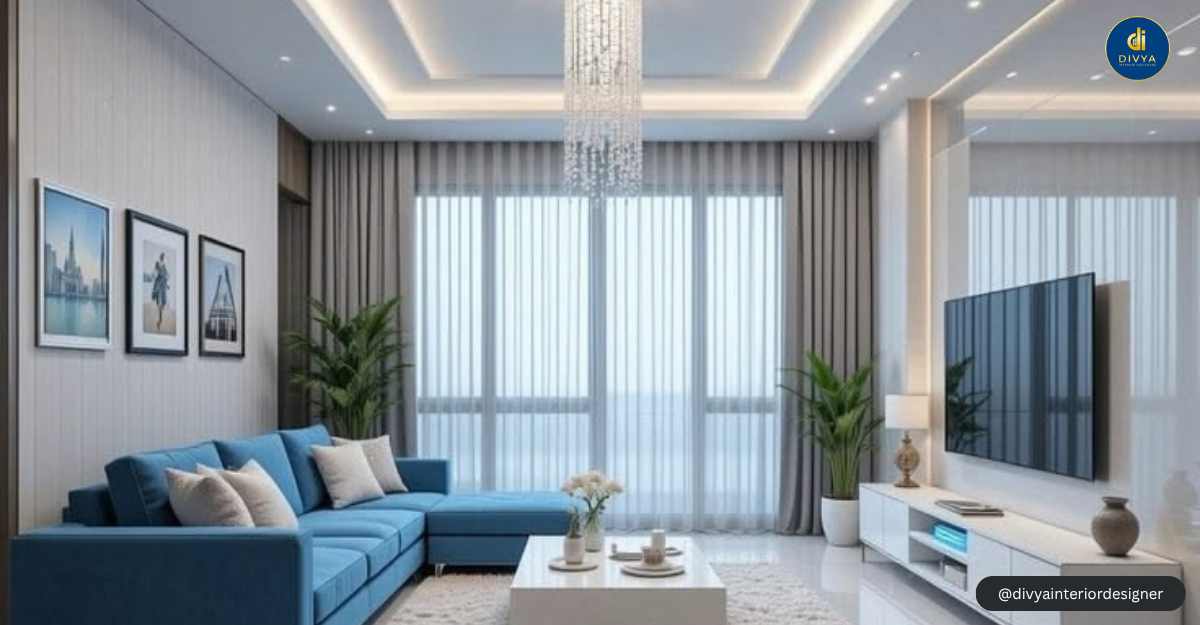
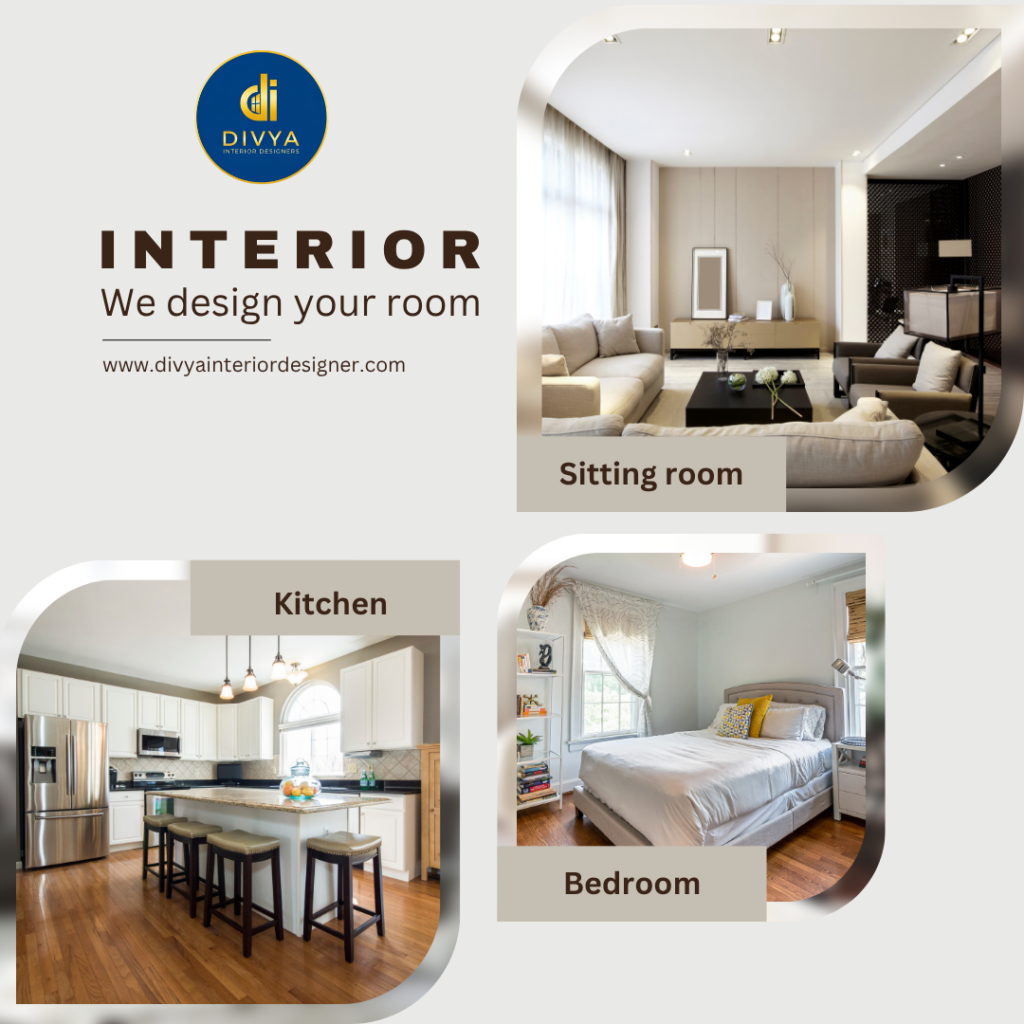
Living room: Make the first impression count
The living room often performs several jobs at once.
It may be:
- Family lounge
- Guest area
- TV room
- Reading corner
- Children’s play area
- Work-from-home space
A smart design can divide these functions visually without making the room feel crowded.
Consider:
- A clean TV wall
- Concealed storage
- Layered lighting
- Comfortable seating
- One statement element
- Neutral base colours
- Textured accents
Don’t copy a showroom blindly. Your family doesn’t live in a showroom.
Modular kitchen: Design around movement
Kitchen design should start with workflow.
Think about the relationship between:
Refrigerator → Sink → Preparation → Hob → Storage
You also need to consider:
- Appliance placement
- Counter height
- Drawer sizes
- Corner storage
- Tall units
- Overhead cabinets
- Utility space
- Ventilation
- Easy-clean finishes
A beautiful kitchen that makes everyday cooking frustrating is not a successful kitchen.
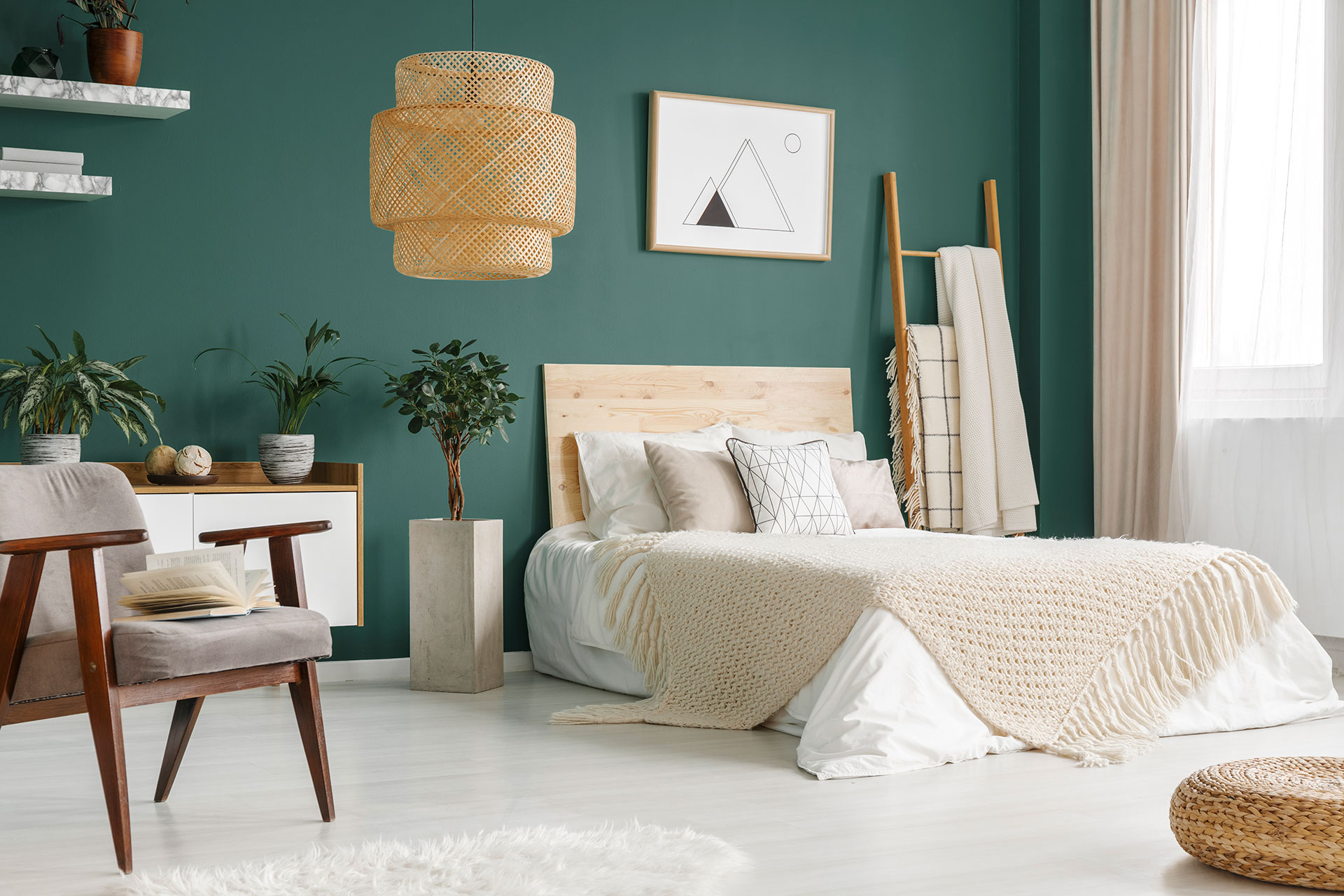
Bedroom: Design for rest
Bedrooms should feel calmer than the rest of the house.
Good choices can include:
- Warm lighting
- Soft textures
- Practical bedside storage
- Full-height wardrobes
- Minimal visual clutter
- Comfortable colours
- Blackout curtains where required
The bedroom does not need ten decorative elements. Sometimes the best design decision is simply knowing when to stop.
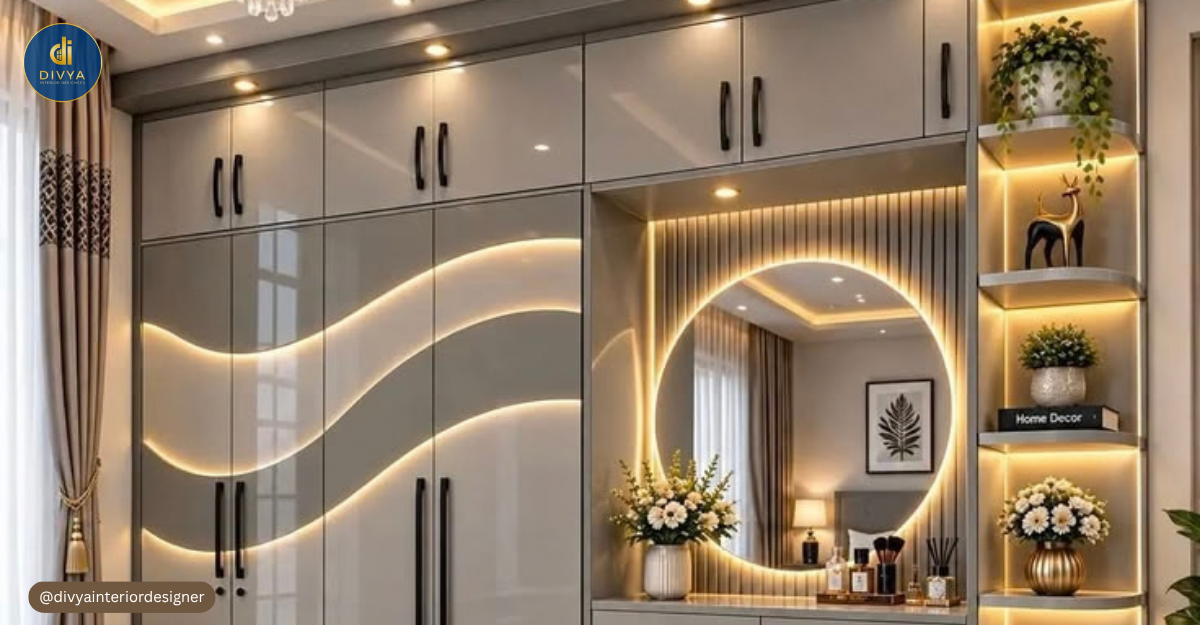
Wardrobes: Use vertical space
Floor-to-ceiling wardrobes can provide more usable storage without consuming additional floor area.
Internal organization can include:
- Hanging sections
- Drawers
- Shelves
- Accessories storage
- Suitcase compartments
- Shoe storage
- Seasonal storage
The goal is not merely “more wardrobe.”
It is better-organized wardrobe space.
Residential Interior Designers Near Me: How Much Does Interior Design Cost?
One of the most important questions homeowners ask is:
“How much will my home interior cost?”
The honest answer is: it depends.
Current 2026 market estimates vary significantly by city, home size, materials, finishes, scope and execution model. For example, one current Indian industry estimate places typical 1BHK interiors around ₹3.5–6 lakh, 2BHK interiors around ₹5.5–9 lakh and 3BHK interiors around ₹8–14 lakh for specified scopes, while another 2026 guide gives broader project ranges. These figures are indicative, not fixed quotations.
Indicative budgeting framework
| Home | Broad planning range* | Typical focus |
|---|---|---|
| 1BHK | ₹3.5–7 lakh+ | Kitchen, wardrobe, living essentials |
| 2BHK | ₹6–12 lakh+ | Kitchen, wardrobes, living room |
| 3BHK | ₹8–18 lakh+ | Full-home storage and multiple rooms |
| Premium 3BHK | ₹15 lakh+ | Premium finishes and customized furniture |
| Villa/Duplex | ₹20 lakh+ | Larger scope and customization |
*These are planning ranges, not quotations. Actual prices depend on carpet area, material specifications, design complexity, civil/electrical work, hardware, appliances, furniture and execution requirements.
What changes the price?
Home size
A larger home generally needs more materials, furniture, storage and labour.
Material quality
There can be a significant difference between budget, mid-range and premium finishes.
Hardware
Soft-close mechanisms, premium hinges, drawer systems and specialized accessories can increase the cost—but may improve usability.
Design complexity
A straightforward wardrobe costs differently from a highly customized architectural wardrobe with special lighting, glass, fluted panels and accessories.
Civil and electrical work
Demolition, flooring, plumbing, wiring, ceiling work and wall modifications can materially affect the budget.
A useful cost estimator
You can create a simple planning calculator:
Estimated Interior Budget = Approximate Designed Area × Expected Cost Per Sq. Ft. + Additional Works
Additional works may include:
- Civil modifications
- Electrical upgrades
- Plumbing
- Appliances
- Loose furniture
- Curtains
- Décor
- Installation
- Taxes
This is only a planning tool. A site-specific quotation is much more reliable.
How to Choose the Right Interior Designer Near Me
The cheapest quotation is not automatically the best quotation.
Imagine receiving three quotes:
Designer A: ₹8 lakh
Designer B: ₹11 lakh
Designer C: ₹15 lakh
At first glance, A looks like the winner.
But then you discover:
- A excludes several storage units.
- B includes better hardware.
- C includes premium finishes and additional electrical work.
Suddenly, the comparison changes.
Use a scope-first comparison
Before comparing prices, compare:
- Material specifications
- Number of wardrobes
- Kitchen configuration
- Hardware brands/specifications
- Furniture inclusions
- False ceiling scope
- Electrical work
- Painting
- Installation
- Design fees
- Taxes
- Warranty
- Project timeline
- Payment schedule
This is why two apparently similar quotations can have very different final costs.
Questions to ask before hiring
Ask your potential designer:
- Can I see relevant completed projects?
- What materials are included?
- What is excluded?
- Who supervises execution?
- How are design revisions handled?
- What is the expected timeline?
- What happens if material prices change?
- Is there a warranty?
- How are payments structured?
- Will I receive detailed drawings?
- How are delays handled?
- Who coordinates different vendors?
A good designer should be comfortable answering uncomfortable questions.
A Practical 7-Step Process for Your Home Interior
Step 1: Define your lifestyle
Write down what is actually important to you.
For example:
“We need lots of kitchen storage, a work-from-home desk, three wardrobes and a child-friendly living room.”
That is far more useful than simply saying, “We want modern interiors.”
Step 2: Fix your budget range
Don’t wait until material selection to discover your budget.
Set:
- Comfortable budget
- Maximum budget
- Must-have items
- Nice-to-have items
This makes decision-making much easier.
Step 3: Measure the space
Accurate dimensions matter.
Important measurements include:
- Room length and width
- Ceiling height
- Doors
- Windows
- Columns
- Electrical points
- Plumbing points
- Existing fixtures
Step 4: Create a design direction
Choose a broad style:
- Modern
- Contemporary
- Minimalist
- Scandinavian
- Japandi
- Luxury
- Traditional-modern fusion
- Warm modern
You don’t need to become an interior-design professor overnight.
A small collection of reference images is enough to communicate your taste.
Step 5: Finalize materials
Don’t approve a material simply because the sample looks good under showroom lighting.
Check:
- Finish
- Maintenance
- Durability
- Warranty
- Cleaning requirements
- Colour consistency
- Hardware compatibility
Step 6: Approve the scope
Your quotation should make it clear what you are actually buying.
Step 7: Monitor execution
Design doesn’t end when the 3D view looks beautiful.
Execution quality matters just as much.
Check:
- Alignment
- Edge finishing
- Hardware installation
- Electrical positioning
- Cabinet dimensions
- Paint finish
- Lighting
- Door clearances
Case Study: Livspace and the Challenge of Designing Homes at Scale
A useful real-world example is Livspace, a major Indian home-interiors platform.
Background / Problem
Residential interiors are complicated because every home is different. Apartment sizes vary, homeowners have different budgets and families use their spaces differently. Scaling interior design therefore requires a system that can manage personalization without losing consistency.
Strategy / Approach
Livspace built a technology-enabled interior design and execution model around standardized workflows, designer collaboration, product selection and project management. Its approach attempts to bring multiple parts of the home-interior journey together rather than leaving homeowners to coordinate every contractor independently.
The company states that it has designed more than 50,000 homes, demonstrating the scale at which structured interior processes can operate.
The larger lesson is particularly relevant to anyone searching for residential interior designers near me: the process matters almost as much as the design.
A homeowner needs more than a beautiful concept image. They need measurements, drawings, material decisions, budgeting, procurement, execution and quality control to work together.
Results / Impact
The 50,000+ homes figure illustrates substantial operational scale rather than guaranteeing a particular result for every homeowner. It also shows why organized project management has become increasingly important in the residential interiors sector.
Takeaway
Don’t evaluate a designer only by photographs.
Evaluate the system behind the photographs.
Ask how requirements are collected, how revisions happen, how materials are documented, who supervises execution and how quality is checked.
A stunning 3D render is exciting.
A stunning 3D render that becomes a well-built home is the real win.
Interior Design Trends Homeowners Should Watch in 2026
Design trends change quickly, but some are becoming more practical and lifestyle-driven.
1. Warmer minimalism
Minimal does not have to mean cold.
Expect more:
- Warm wood tones
- Soft fabrics
- Textured walls
- Natural-looking finishes
- Layered lighting
- Earthy colour palettes
2. Multifunctional spaces
A single room may need to function as:
Office + Study + Guest Room
or
Living Room + Entertainment + Storage
This makes flexible furniture and clever space planning increasingly valuable.
Recent coverage of compact homes similarly highlights multipurpose furniture and visual openness as practical strategies for smaller spaces.
3. Personalized luxury
Luxury is gradually becoming less about putting expensive materials everywhere and more about creating an environment that feels personal.
Recent reporting on India’s premium housing segment points toward greater interest in privacy, technology, personalization and experience.
4. Smarter lighting
Lighting is becoming an important part of the overall interior experience.
Instead of relying entirely on ceiling lights, homeowners can combine task, ambient and accent lighting.
5. AI-assisted visualization
AI and generative tools are increasingly being explored for interior visualization and customization. Academic research has also examined AI-generated interior environments as a way to accelerate personalized design concepts.
But remember:
AI can suggest a beautiful room. It cannot walk into your kitchen and discover that the refrigerator door hits the cabinet.
Human measurement, site understanding and execution still matter.
People Also Ask: Interior Design Near Me
What should I expect from an interior designer near me?
An interior designer near you should ideally help with more than decoration. Depending on the project scope, the service may include space planning, concept development, 2D/3D designs, material selection, furniture and storage planning, lighting, modular kitchen design, wardrobes and execution coordination. The exact scope varies between designers, so ask for a written proposal before starting. A good first consultation should cover your home’s size, lifestyle, preferred style, timeline and budget. Most importantly, choose someone who explains what is included and excluded instead of giving you a vague “complete interior” promise.
How much does interior design cost in India in 2026?
Interior design costs in India vary considerably based on home size, location, materials, customization and project scope. Current 2026 estimates from major interior platforms show broad ranges rather than one universal price. For example, indicative estimates can place 2BHK projects around several lakh rupees and higher depending on specifications, while premium or highly customized projects can cost substantially more. The best approach is to define your requirements first and obtain an itemized quotation. Comparing only the final price can be misleading if two quotations include different materials or services.
How do I choose the best modern interior designer near me?
Start by reviewing completed projects that resemble your home in size, style and budget. Then evaluate the designer’s process, communication, material specifications, quotation transparency and execution support. Ask who will manage the site, how revisions work, what happens when something is damaged or delayed and whether warranties are provided. Don’t choose purely from social-media photographs. A strong portfolio is useful, but the real test is whether the designer can translate your lifestyle into a practical layout and then execute that design accurately. The best modern interior designer is the one who balances aesthetics, functionality and budget.
Is hiring an interior designer worth it for a 2BHK?
It can be worthwhile, particularly when you need coordinated kitchen, wardrobes, storage, lighting, furniture and space planning. A designer can help avoid common mistakes such as poorly positioned electrical points, inadequate storage, furniture that blocks movement or materials that don’t work together. However, the value depends on the scope of your project and the designer’s fee. If you only need a small cosmetic update, full-service interior design may not be necessary. If you are doing a complete 2BHK interior, professional planning can make the project easier to coordinate and can help you make better decisions before money is committed.
What should I ask residential interior designers near me before hiring them?
Ask about experience, portfolio, materials, scope, design revisions, project timeline, payment schedule, execution supervision and warranty. Request an itemized quotation showing what is included and excluded. Ask whether electrical, plumbing, civil work, false ceiling, painting, furniture, appliances and installation are included or charged separately. You should also understand who coordinates contractors and what happens if the project is delayed. Finally, ask how design changes are handled after approval. These questions may feel detailed, but they can prevent expensive misunderstandings later. A transparent designer should welcome clear questions because good documentation protects both the homeowner and the design team.
Your Interior Designer Selection Checklist
Before signing, use this simple checklist:
- Portfolio reviewed
- Similar project experience verified
- Design style discussed
- Home measurements completed
- Budget discussed
- Material specifications documented
- Kitchen scope confirmed
- Wardrobe scope confirmed
- Furniture scope confirmed
- Electrical work clarified
- False ceiling clarified
- Civil work clarified
- Painting scope clarified
- Timeline discussed
- Payment schedule documented
- Warranty discussed
- Exclusions clearly listed
- Final quotation approved
How Divya Interior Designer Can Help You Plan Better
If your search for interior design near me has brought you to Divya Interior Designer, the next step should be a conversation about your actual home—not a generic package.
Tell the designer:
“This is my home. This is how my family lives. This is what I need. This is my budget.”
That information is much more useful than simply saying:
“Make it luxury.”
A thoughtful residential interior plan can help coordinate:
- Living room interiors
- Bedroom interiors
- Modular kitchens
- Wardrobes
- TV units
- False ceilings
- Lighting
- Storage
- Study areas
- Full-home interiors
- Modern home interiors
- Customized furniture
- Space optimization
For homeowners in Noida Extension, Greater Noida West, Greater Noida, Noida, Gaur City and surrounding Delhi NCR areas, hyperlocal understanding can also make communication and site coordination easier.
Interactive Content Ideas for This Blog
To make this page even more useful and conversion-focused, consider adding:
1. Interior Budget Calculator
Inputs:
- BHK
- Carpet area
- Finish level
- Number of wardrobes
- Kitchen type
- Furniture requirements
Output:
Estimated project budget range
2. Style Quiz
Questions such as:
- Warm or cool colours?
- Minimal or decorative?
- Wood or stone?
- Open or concealed storage?
- Modern or traditional?
Result:
Your recommended interior style
3. FAQ Accordion
Create expandable FAQs covering:
- Interior design cost
- Timeline
- Materials
- Modular kitchens
- Wardrobes
- Design consultation
- Execution
- Warranty
4. Text-Based Infographic
5 Steps to a Better Home Interior
Plan → Design → Budget → Execute → Inspect
Simple. Memorable. Useful.
Expert Tips Before You Start Your Interior Project
Don’t spend the entire budget on visible finishes
A beautiful wall is great.
Good hardware, durable materials and functional storage are better long-term investments.
Plan electrical points early
Moving an electrical point after furniture installation is considerably more frustrating than planning it before execution.
Think about maintenance
Ask:
“Will I still like this after three years?”
A material that looks stunning but requires constant maintenance may not be the right choice for a busy family.
Keep some budget flexibility
Renovation and interiors can reveal unexpected requirements.
A reasonable contingency can protect you from last-minute stress.
Don’t blindly follow trends
Trends are useful for inspiration.
Your home should not become a museum of everything that was fashionable in 2026.
Choose elements that you genuinely enjoy.
Conclusion: Don’t Just Design a Home—Design the Way You Live
Searching for interior design near me is only the beginning.
The real journey starts when you understand what your home needs, how your family uses each room and how much you realistically want to invest.
The right interior designer can help turn those answers into a practical design—one that looks beautiful in photographs but also works beautifully on a Tuesday morning when someone is rushing to work, someone is making breakfast and someone is searching for the keys that were “definitely on the table.”
That is what good interior design should do.
It should make everyday life easier.
If you’re planning a home interior project in Noida, Greater Noida, Greater Noida West, Noida Extension, Gaur City, Ghaziabad or nearby Delhi NCR areas, connect with Divya Interior Designer to discuss your requirements, style and budget.
Ready to transform your space?
Call Divya Interior Designer: +91 8800468611
Start with your requirements. Discuss your ideas. Plan your dream home with confidence.
Your dream home doesn’t need to look like everyone else’s.
It needs to feel like yours.