
Quick Overview
Great interior design for cafe spaces combines visual appeal, customer comfort, practical layouts, and memorable branding. From choosing the right lighting and furniture to planning service counters and controlling costs, every decision affects how your café works. Whether you are opening a small coffee shop, refreshing an existing café, or developing a restaurant-style concept, a thoughtful design can help you create a welcoming environment that customers enjoy visiting.
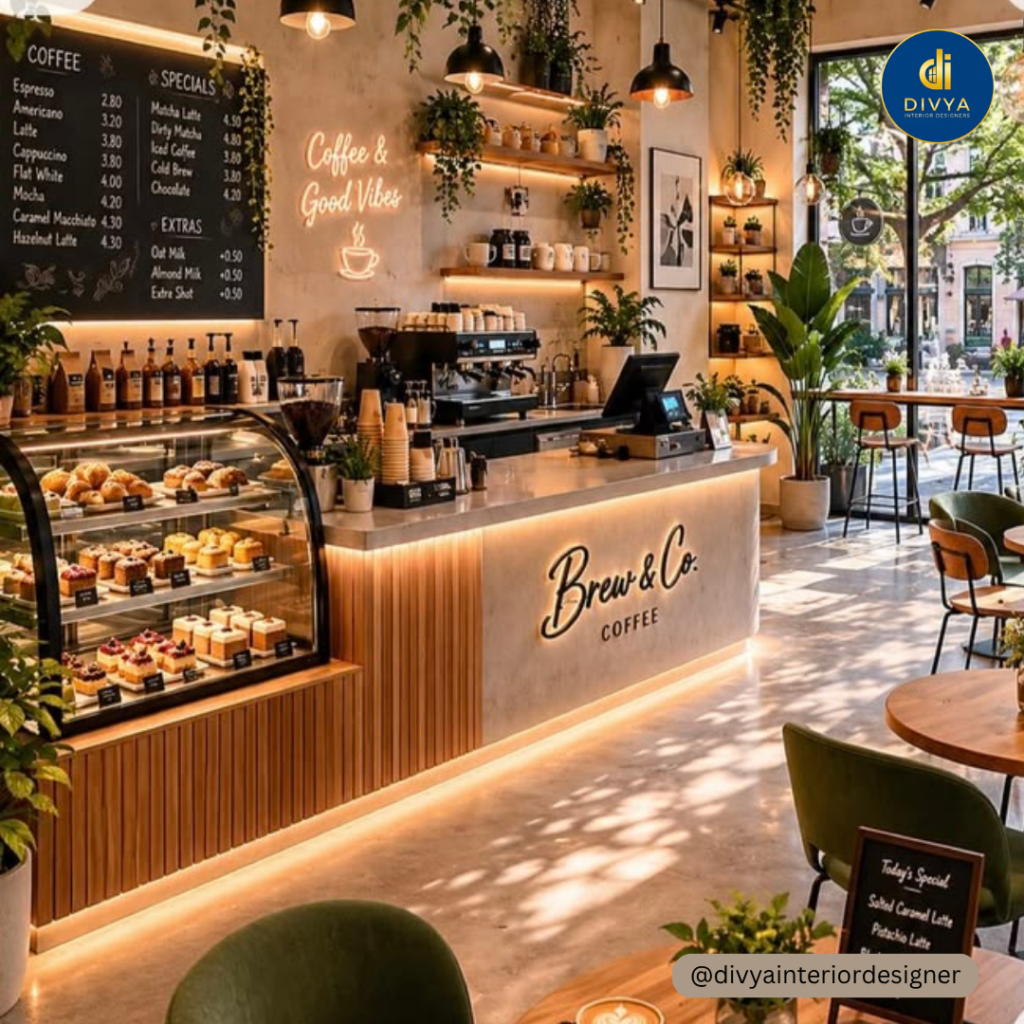
Introduction: ☕ Your Café Serves Great Coffee. Does Its Design Make People Stay?
Interior design for cafe businesses is about much more than choosing attractive furniture or painting the walls a fashionable colour. It is about creating an experience that makes people feel comfortable the moment they walk through the door.
Imagine two cafés on the same street. Both offer excellent coffee at similar prices. One has harsh lighting, crowded tables, and a confusing ordering counter. The other feels welcoming, has comfortable seating, and reflects a clear brand personality. Which one would you be more likely to visit again?
That is where thoughtful design can make a difference.
If you are planning a new café or upgrading an existing one, focus on these essentials:
- ✨ First impressions: Create an entrance that looks inviting and reflects your brand.
- 🪑 Customer comfort: Plan seating for individuals, friends, families, and people who prefer longer visits.
- 💡 Lighting: Combine natural light, functional task lighting, and comfortable ambient lighting.
- 🎨 Brand identity: Use colours, textures, furniture, and signage that make your business recognisable.
- 💰 Budget control: Prioritise essential construction, durable materials, and practical features before optional decoration.
- 📐 Professional planning: Consider the layout, service flow, accessibility, and safety requirements before work begins.
At Divya Interior Designer, you can explore interior design ideas and discuss your space requirements. For inspiration on combining colours, textures, and decorative elements, read Modern Decoration Ideas for Your Home.
Whether your dream is a cosy neighbourhood coffee shop or a stylish destination café, the goal is simple: make the space look inviting while ensuring it works smoothly every day.
1. Why Interior Design for Cafe Businesses Matters
A café is not just a place to buy coffee. It can be a meeting spot, a study corner, a place for a quick breakfast, or somewhere people go to relax after a busy day.
Your interior should support these experiences while helping your team serve customers efficiently.
Create a memorable first impression
Customers often notice the entrance, window display, signage, and general atmosphere before they read the menu. A clear design concept helps your business stand out from nearby competitors.
For example, a neighbourhood bakery café might use natural wood, cream walls, and simple displays. A modern speciality coffee shop might feature darker finishes, clean furniture, and carefully selected pendant lights.
Neither style is automatically better. The right choice depends on your audience, menu, location, and brand identity.
Make every square foot useful
A beautiful café can still disappoint customers if the chairs are uncomfortable or tables are placed too close together.
A practical layout should provide:
- Clear movement between the entrance, counter, seating, and exit.
- Suitable distances between tables.
- Enough working space for staff carrying food and drinks.
- Accessible routes and appropriate seating options.
- Well-planned storage for supplies, cleaning materials, and equipment.
Do not plan a layout using furniture dimensions alone. Consider how people move around occupied chairs, open doors, and busy service areas. Confirm relevant accessibility, fire safety, and building requirements before construction.
Turn your brand into a physical experience
Your logo, menu, furniture, colours, packaging, and signage should tell a consistent story.
A playful dessert café might use colourful accents and creative illustrations. A premium coffee shop could choose restrained colours, textured surfaces, and a clean counter design.
The secret is consistency. You do not need ten different decorative ideas when three well-chosen elements can communicate your brand more effectively.
2. Coffee Shop Interior Design Ideas That Work in Real Spaces
The best coffee shop interior design does not depend on having a huge budget. It depends on making deliberate choices that suit the available space and the people who will use it.
Minimalist café design
Minimalist interiors use a limited colour palette, simple furniture, and uncluttered surfaces. These choices can help a compact café feel more organised and spacious.
Consider light-coloured walls, wooden tables, discreet storage, and a few carefully selected decorative pieces. Keep the menu easy to read and avoid filling every wall with shelves or artwork.
Best suited for: Small coffee shops, takeaway cafés, and contemporary speciality coffee brands.
Practical tip: Spend on good lighting and durable furniture before adding decorative accessories. A clean, well-maintained space often feels more inviting than a room filled with expensive but unrelated objects.
Industrial café interiors
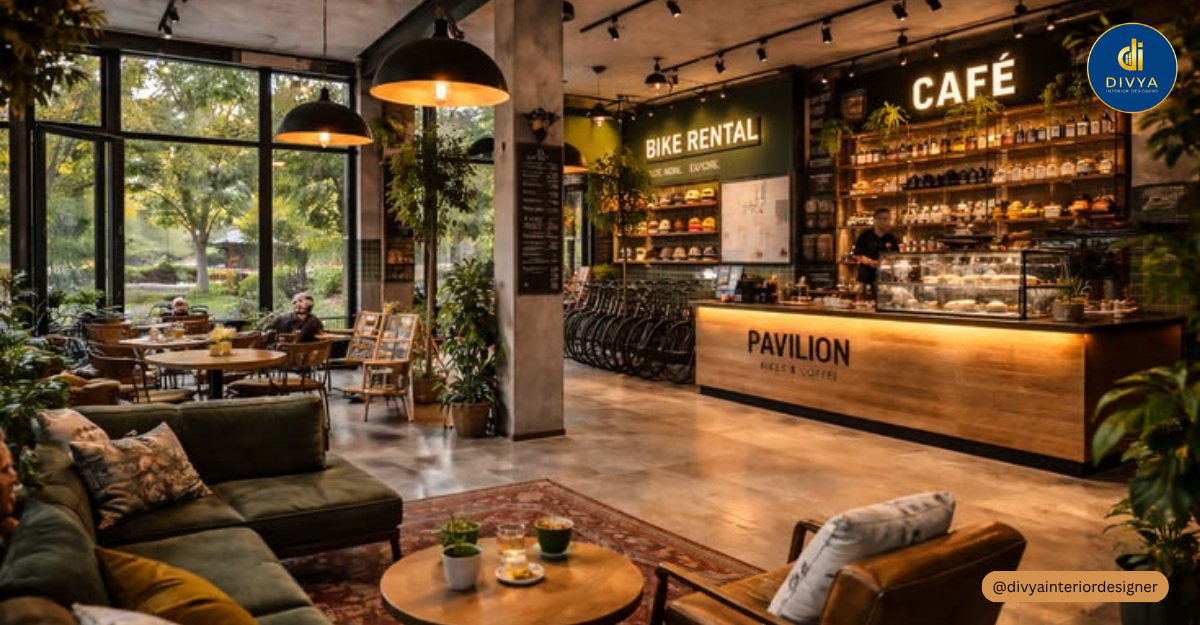
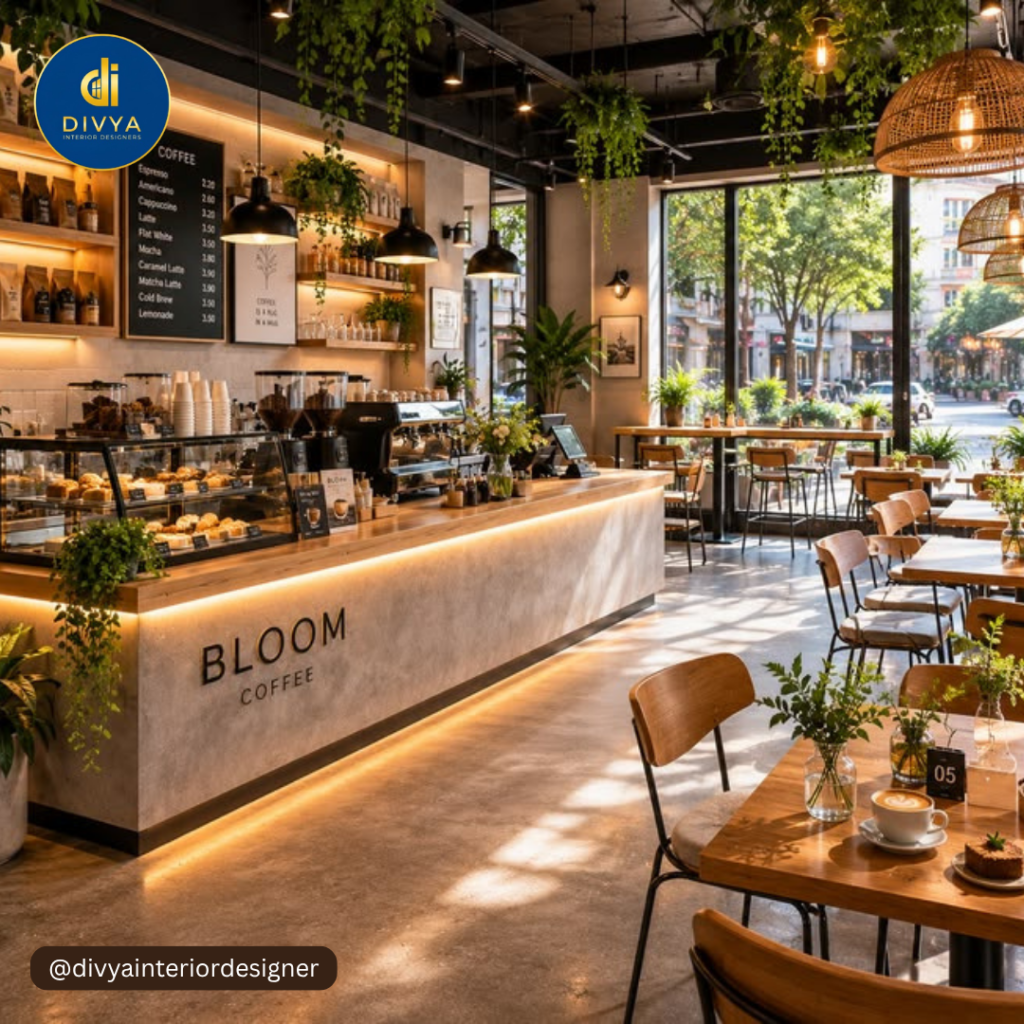
Industrial design combines materials such as brick, metal, timber, and concrete-inspired finishes. Pendant lighting and exposed architectural features can add character without requiring elaborate decoration.
However, an industrial interior can feel cold if it lacks softer textures. Upholstered seating, acoustic treatments, greenery, and warmer lighting can help balance the look.
Best suited for: Urban cafés, casual dining concepts, and coffee shops with a contemporary identity.
Practical tip: If your property does not have attractive exposed brick or ceilings, do not spend unnecessarily trying to imitate them. A few well-chosen finishes can communicate the style without an expensive renovation.
Nature-inspired and cosy interiors
Natural materials, greenery, and soft textures can create a relaxed atmosphere. Wooden finishes, indoor plants, textured fabrics, and daylight work well together.
Choose plants according to available sunlight and maintenance needs. Keep decorative elements away from food preparation areas when they could interfere with hygiene, and select surfaces that are easy to clean.
Best suited for: Neighbourhood cafés, brunch spots, and businesses aiming for a calm atmosphere.
Practical tip: Use greenery selectively. A few healthy plants placed thoughtfully can look better than dozens of poorly maintained pots.
Create a distinctive feature corner
A branded wall, attractive mirror, artwork, or carefully designed sign can give customers a memorable visual feature.
Instead of decorating every corner, create one or two intentional focal points. Make sure they fit your brand and do not obstruct seating, circulation, or safety.
A photogenic interior may encourage customers to share pictures online, but social media attention is never guaranteed. Good food, friendly service, cleanliness, and comfort remain essential.
3. Interior Design for Restaurant and Hotel Spaces: Key Differences
Cafés, restaurants, and hotels share several design principles, but each serves a different purpose. Understanding those differences helps you avoid copying a design that looks attractive but does not suit your business.
| Design element | Café | Restaurant | Hotel |
|---|---|---|---|
| Main priority | Coffee, comfort, and flexible visits | Dining and service experience | Hospitality across multiple spaces |
| Typical layout | Counter, smaller tables, lounge seating | Dining tables, waiting areas, service routes | Reception, rooms, lounges, dining areas |
| Lighting | Welcoming, layered, task-focused | Atmosphere with suitable dining visibility | Adapted to each room and activity |
| Materials | Durable, easy-to-clean surfaces | Food-service durability and maintenance | Long-term durability and guest comfort |
| Brand expression | Coffee culture and community | Cuisine and dining identity | Consistent guest experience |
How interior design for restaurant projects differs
Interior design for restaurant projects must balance atmosphere with table arrangements, staff movement, menu visibility, and food-service requirements.
A family restaurant may need flexible seating and easy movement. A fine-dining space may prioritise privacy, carefully controlled lighting, and a quieter atmosphere.
Materials should look appealing while standing up to frequent cleaning and daily wear. Flooring, upholstery, and table finishes should be selected according to their intended use rather than appearance alone.
What makes interior design for hotel projects different?
Interior design for hotel projects cover several connected spaces, including reception areas, corridors, guest rooms, restaurants, and lounges.
Each area has a different purpose, but the overall property should maintain a coherent identity. A hotel café should feel connected to the hotel while still meeting its own requirements for seating, food preparation, ordering, and service.
These projects often require coordination between interior designers, architects, engineers, contractors, and safety professionals.
How to choose the right concept for your business
Before selecting a style, answer these questions:
- Who are your primary customers?
- Will most customers order takeaway or sit inside?
- Will the café serve full meals as well as beverages?
- How much space is available for preparation and storage?
- What atmosphere should customers associate with your brand?
Your answers should shape the layout, furniture, lighting, and materials.
4. Interior Design Cafe: Costs, Budgeting, and Smart Spending
One common mistake café owners make is spending too much on decoration before calculating the complete project cost. Attractive furniture is exciting, but electrical work, plumbing, ventilation, counters, storage, flooring, and finishing materials also need attention.
The better approach is to divide the budget into clear categories.
These are broad preliminary budgets, not fixed rates. They may exclude rent deposits, major structural work, specialised kitchen equipment, taxes, and site-specific expenses. Obtain itemised quotations from local professionals before committing to a budget.
Where should you spend more?
Prioritise elements that affect safety, durability, daily operations, and customer comfort.
- Electrical and plumbing systems: Plan these early to reduce expensive changes later.
- Counter and workflow: Make ordering, preparation, payment, and pickup efficient.
- Furniture: Choose comfortable, durable seating suitable for your customers.
- Lighting: Combine functional illumination with decorative fixtures.
- Branding: Invest in a few memorable features instead of filling every surface.
- Maintenance: Consider cleaning requirements and long-term replacement costs.
How to compare quotations
Ask every provider to specify what is included. One quotation may cover design and installation, while another may include only selected materials and labour.
Compare the scope of work, material specifications, timelines, payment schedules, warranties where applicable, and procedures for approving additional costs.
A low starting price is not necessarily the best value if essential work has been excluded.
5. How to Choose the Right Cafe Interior Designer
A professional designer should understand more than colours and attractive furniture. Commercial interiors require practical planning, material selection, coordination, and an understanding of how people use a space.
Check the designer’s portfolio
Look for examples of cafés, restaurants, retail spaces, or similar commercial projects. Ask how the designer handled limited space, customer movement, storage, lighting, and budget constraints.
If you like a particular project, find out what was included in the service and whether the photographs show the finished space.
A portfolio is a starting point, not a guarantee. Discuss your own requirements rather than assuming another project’s design can be copied without changes.
Understand the design and execution process
Before signing an agreement, clarify whether the service includes:
- Initial consultation and concept development.
- Floor plans, technical drawings, and 3D visualisation.
- Material and furniture selection.
- Lighting, electrical, and plumbing coordination.
- Contractor coordination and site supervision.
- Project timelines, revisions, and additional charges.
Not every designer provides every service. Confirm the exact scope in writing.
Prepare a checklist before your first meeting
Use this list to make your first consultation more productive.
- Define your café concept and target customers.
- Measure the site and check building restrictions.
- Set a realistic budget with a contingency allowance.
- List kitchen, electrical, plumbing, and storage needs.
- Collect design references and brand colours.
- Discuss accessibility, fire safety, and ventilation.
- Request itemised costs and a written project scope.
For a consultation, visit Divya Interior Designer’s contact page to discuss your requirements and find out which services may suit your project.
6. Real-World Case Study: What Starbucks Teaches Us About Café Design
A useful example of café design in practice comes from Starbucks and its approach to creating welcoming coffeehouse environments.
Background and problem
A café can feel less inviting when seating is uncomfortable, the atmosphere feels cold, or the space does not support the way customers want to use it.
In its published accounts of coffeehouse redesigns, Starbucks has discussed adapting spaces to customer needs, including comfort, the local environment, and practical features such as power outlets. These considerations illustrate a broader challenge for café owners: a visually attractive room still needs to work for real customers.
Strategy and approach
Several design principles can be applied to smaller independent cafés.
1. Improve seating comfort. Choose furniture that suits the expected visit. A café serving quick takeaway orders may need compact seating, while a destination coffee shop may benefit from comfortable chairs and a few larger tables.
2. Use materials to create atmosphere. Wood, soft textures, and carefully chosen finishes can make a space feel more welcoming. Materials should still be suitable for daily commercial use.
3. Reflect the local community. Artwork, colour choices, and decorative details can give a café a more individual identity instead of making it feel like a copy of another business.
4. Make practical features easy to use. Plan the counter, menu display, collection point, electrical outlets where appropriate, and staff routes before finalising the decorative elements.
5. Keep the brand consistent. A recognisable visual identity should connect the signage, menu, interior, and packaging.
Results and impact
Starbucks has shared company-reported feedback about its coffeehouse redesigns and its broader efforts to improve the customer experience. Such reports can provide useful examples of design priorities, but they should not be interpreted as controlled evidence that an interior change alone increases sales, customer retention, or profitability.
Without verified figures tied specifically to a particular redesign, assigning a percentage increase in revenue or customer visits would be misleading.
For an independent café, the most useful approach is to track measurable outcomes after making changes. Compare customer feedback, repeat visits, average transaction value, service delays, and sales patterns over comparable periods. Consider other influences, including pricing, menu changes, promotions, and seasonal demand.
Takeaway: What can a small café owner learn?
You do not need a multinational company’s budget to apply these principles. Start with comfortable seating, clear circulation, functional lighting, a practical service counter, and a design that reflects your neighbourhood or brand.
Make one improvement at a time when possible, and evaluate whether it solves a real problem.
For background, read Starbucks’ official coffeehouse design updates. Treat the example as inspiration, not a promise of guaranteed commercial results.
7. Emerging Café Interior Design Trends to Consider in 2026
Trends can provide inspiration, but a successful café interior should remain practical after the latest social media aesthetic loses popularity.
Flexible seating and multifunctional spaces
Customers may visit the same café for different reasons. One person wants a quick takeaway, another wants to meet a friend, and someone else wants a comfortable place to read or work.
Consider combining two-person tables, a communal table, and a small lounge area where space permits. Flexible furniture can help the layout adapt to different customer needs.
Natural materials and local character
Wood finishes, tactile surfaces, greenery, and locally inspired artwork can create a more personal environment.
Rather than copying a popular café, use details that reflect your location, menu, and brand. Authenticity can come from the story behind the design rather than the price of the materials.
Practical and easy-to-maintain finishes
Commercial interiors need to withstand frequent use. Washable wall finishes, durable flooring, suitable upholstery, and accessible cleaning areas may be more valuable over time than decorative materials that require frequent repairs.
Technology and customer convenience
Depending on your business model, digital menus, clear pickup signage, accessible charging points, and well-organised ordering areas can improve convenience.
Technology should solve a real customer or operational problem. A digital menu is not automatically better if it is difficult to read or creates confusion at the counter.
Expert tip: Before adopting a trend, ask three questions: Does it suit my customers? Can my team maintain it? Does it fit my budget? If the answer to all three is yes, it deserves consideration.
Useful resources for planning your café
For reliable guidance, consult relevant official resources rather than relying solely on design blogs.
- Bureau of Indian Standards — information on Indian standards relevant to building materials and safety.
- Ministry of Tourism, Government of India — hospitality-related information and publications.
- U.S. Access Board — accessibility design guidance that can help you understand inclusive planning principles. Check applicable Indian requirements separately.
These sources serve different purposes and do not replace local professional advice or project-specific compliance checks.
8. People Also Ask: Frequently Asked Questions
1. How do you design a small café interior?
Designing a small café starts with understanding how the available space will be used. Measure the site, identify the ordering and preparation areas, and create clear routes between the entrance, counter, seating, and exit. Choose furniture that fits the room instead of overcrowding it. Light colours, natural light, mirrors in suitable locations, and uncluttered walls can help a compact café feel more open. Use vertical storage where appropriate and select durable finishes. A professional designer can help balance customer comfort, accessibility, storage, and service efficiency without wasting valuable floor space.
2. How much does interior design for cafe projects cost in India?
The cost of interior design for cafe projects in India depends on the city, floor area, property condition, materials, furniture, and scope of work. A simple refresh may cost considerably less than a complete fit-out involving new electrical systems, plumbing, counters, ventilation, and customised furniture. Use preliminary budget ranges only for initial planning, then request itemised quotations from local designers and contractors. Clarify whether design fees, materials, labour, equipment, taxes, and installation are included. Keep a contingency reserve because unexpected site conditions can increase the final cost. Always compare quotations based on their actual scope rather than the headline price.
3. Which colours work best for coffee shop interior design?
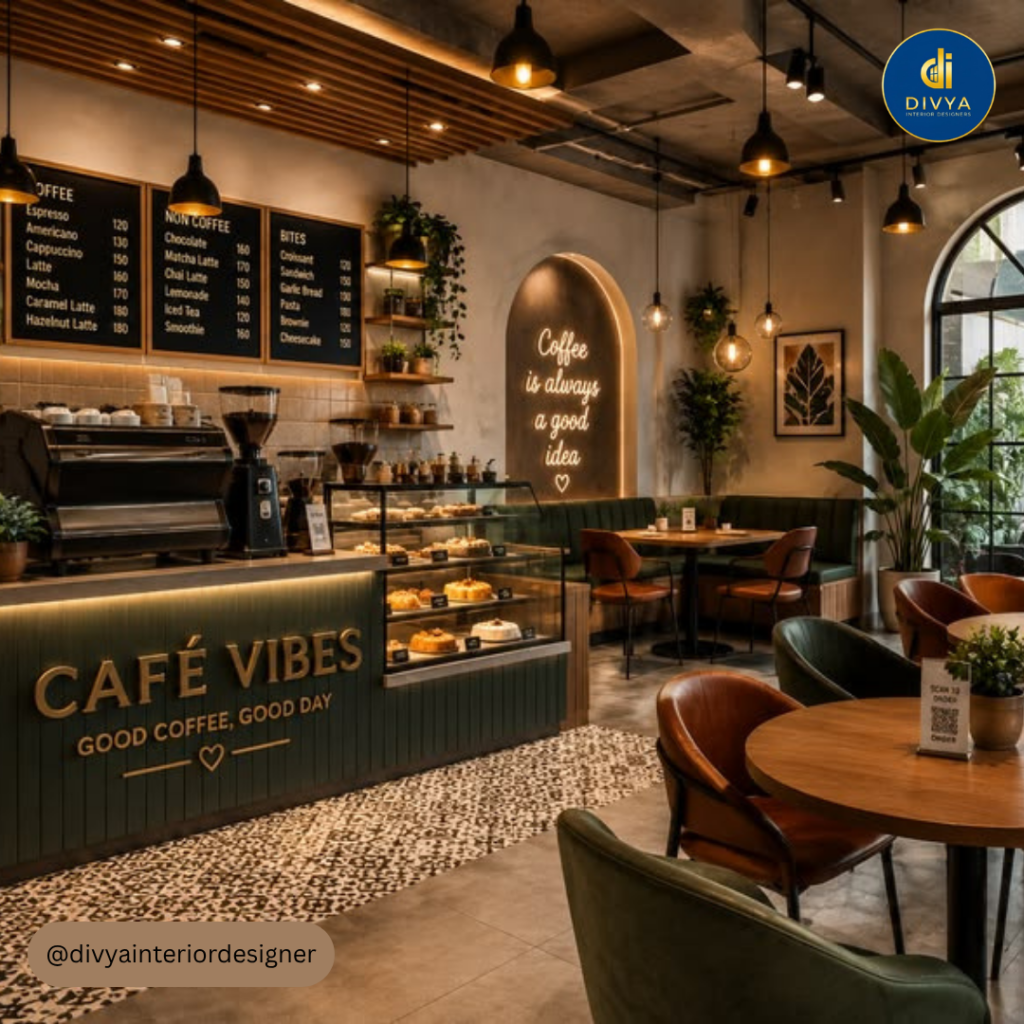
The best colours depend on your café’s identity, lighting, location, and target customers. Warm beige with natural wood creates a relaxed atmosphere, while charcoal with timber can produce a contemporary industrial look. Muted green with cream may suit a nature-inspired coffee shop, and brighter accents can give a dessert café more personality. Consider how colours appear in daylight and under artificial lighting before making a final decision. Use a limited palette across walls, furniture, signage, and packaging to maintain consistency. Testing samples before purchasing materials can help you avoid costly mistakes.
4. How do I choose between café and restaurant interior design?
The main difference is how customers and staff use the space. Café interiors often need a prominent beverage counter, convenient ordering, flexible seating, and an atmosphere suitable for both quick visits and longer stays. Restaurant interiors usually place greater emphasis on dining arrangements, food service, table spacing, and the experience associated with the cuisine. Businesses that serve both coffee and full meals may need a combination of these features. Before choosing a design, define your menu, service style, customer profile, expected busy periods, and operational requirements. These decisions should guide your layout, lighting, furniture, and material selection.
5. Should I hire a professional cafe interior designer?
Hiring a professional can be valuable when you need help coordinating the layout, finishes, furniture, lighting, storage, and technical requirements. A designer can develop a concept that reflects your brand while considering how customers and staff move through the space. Depending on the agreed scope, they may also help with drawings, material selection, and contractor coordination. Before hiring anyone, review relevant project examples, ask for a written quotation, and confirm how revisions and additional costs will be handled. For a small refresh, you may need only a limited consultation rather than a full-service design and execution package.
6. What should I consider before opening a café?
Before opening a café, establish your business concept, target customers, menu, location, available budget, and operating model. Assess the property for suitable utilities, ventilation, storage, kitchen requirements, accessibility, and applicable building and fire safety rules. Your interior layout should support efficient ordering, food preparation, cleaning, and customer movement. Choose durable materials and furniture that match the way the space will be used. Investigate the necessary local permissions and food-business requirements before committing to construction. A well-planned interior supports the business, but it should be developed alongside operational and financial planning.
Conclusion: Create a Café People Want to Return To ☕
Successful interior design for cafe businesses combines visual appeal with comfort, functionality, and a clear brand identity. The right layout helps staff work efficiently, thoughtful lighting creates atmosphere, and carefully selected materials make everyday maintenance easier.
Before investing in decoration, remember these essentials:
- Understand your customers and your café’s purpose.
- Plan the layout before choosing furniture.
- Set a realistic budget and compare detailed quotations.
- Invest in durable finishes, comfortable seating, and practical lighting.
- Create a distinctive atmosphere without sacrificing usability.
- Review customer feedback and business performance after opening.
Whether you are planning a cosy neighbourhood coffee shop, a contemporary restaurant, or a larger hospitality project, thoughtful design can help turn your ideas into a welcoming and functional space.
Ready to plan your café interior? Visit Divya Interior Designer to explore the services and discuss your requirements. You can also contact the interior design team to discuss your project.